
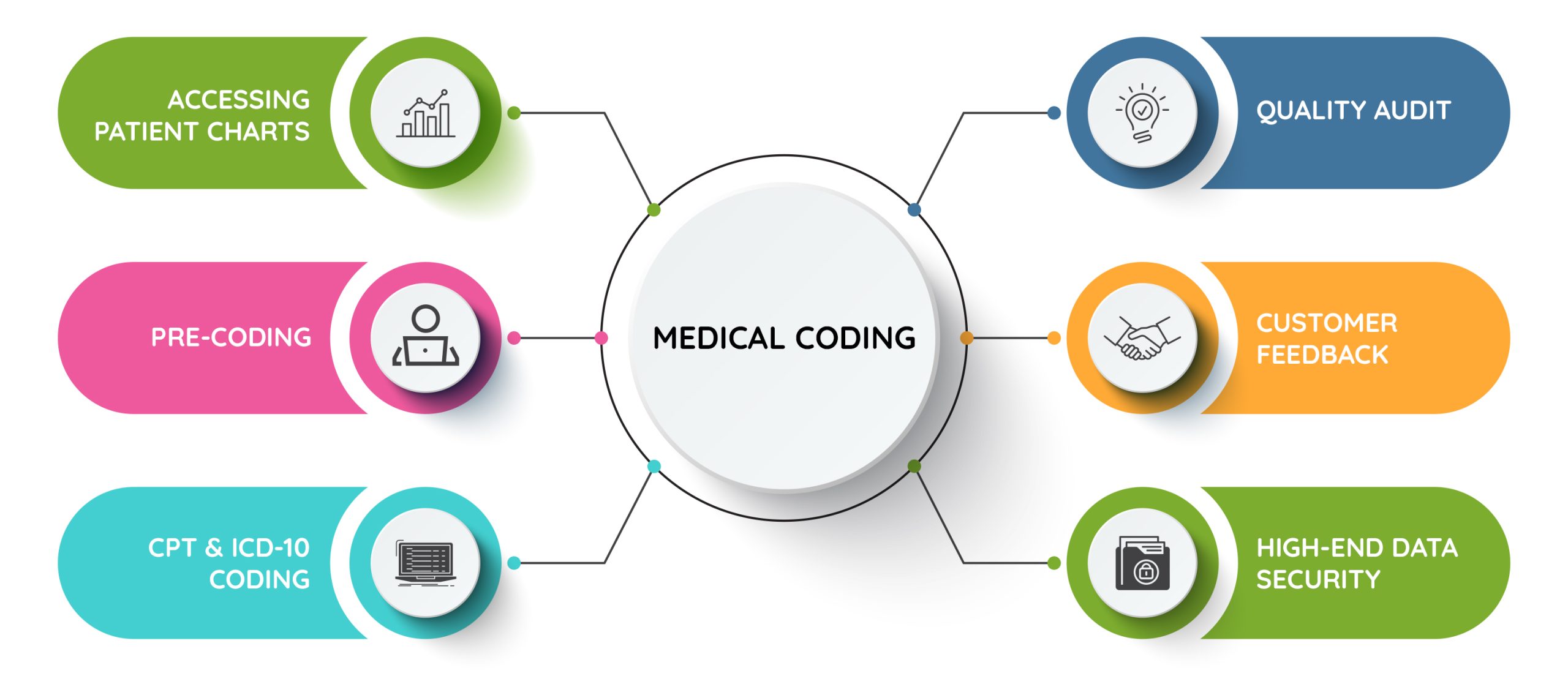
Medical coding plays a critical role in the healthcare industry by transforming diagnoses, procedures, and medical services into standardized codes. These codes ensure accurate billing, compliance, and efficient record-keeping. Medical coding development services focus on creating robust systems to streamline these processes, improve accuracy, and adhere to industry standards. Below are the key features of medical coding development services:
Medical coding developers build software tailored to the specific needs of healthcare providers. These solutions support accurate coding, automate repetitive tasks, and simplify complex workflows to enhance productivity and compliance.
Medical coding systems integrate with international standards such as ICD (International Classification of Diseases), CPT (Current Procedural Terminology), and HCPCS (Healthcare Common Procedure Coding System). This ensures compliance with regulatory requirements and uniformity across healthcare providers.
Streamlining workflows is essential in medical coding. Developers design intuitive systems that automate repetitive tasks, reduce manual errors, and optimize the coding and billing process for better efficiency and accuracy.
Medical coding software often needs to work in tandem with other systems like Electronic Health Records (EHRs), billing platforms, and practice management systems. Development services include seamless integration to enable smooth data exchange and enhance interoperability.
Protecting patient information is paramount. Medical coding solutions adhere to strict data security protocols and healthcare regulations, such as HIPAA, to ensure sensitive information remains secure and confidential.
Comprehensive testing is conducted to verify the functionality, accuracy, and compliance of medical coding applications. This includes unit testing, system testing, and user acceptance testing to ensure reliable performance in real-world scenarios.
Deployment involves transitioning applications into live environments, ensuring minimal disruption to ongoing operations. Post-deployment support and maintenance include resolving issues, monitoring system performance, and implementing updates for continuous improvement.
Developers provide training for medical coders, administrators, and end-users, enabling them to effectively use the system. User manuals and detailed documentation serve as long-term references to ensure smooth operations.
As healthcare standards and technologies evolve, systems may require upgrades to incorporate new coding standards or functionalities. Migration services ensure seamless transitions from legacy systems to modern platforms without data loss or downtime.
Medical coding solutions often include advanced analytics and reporting tools. These features provide insights into coding trends, identify potential compliance risks, and optimize financial outcomes for healthcare organizations.
By leveraging modern technology and industry expertise, medical coding development services empower healthcare organizations to achieve greater accuracy, efficiency, and compliance in their operations.